Event Overview
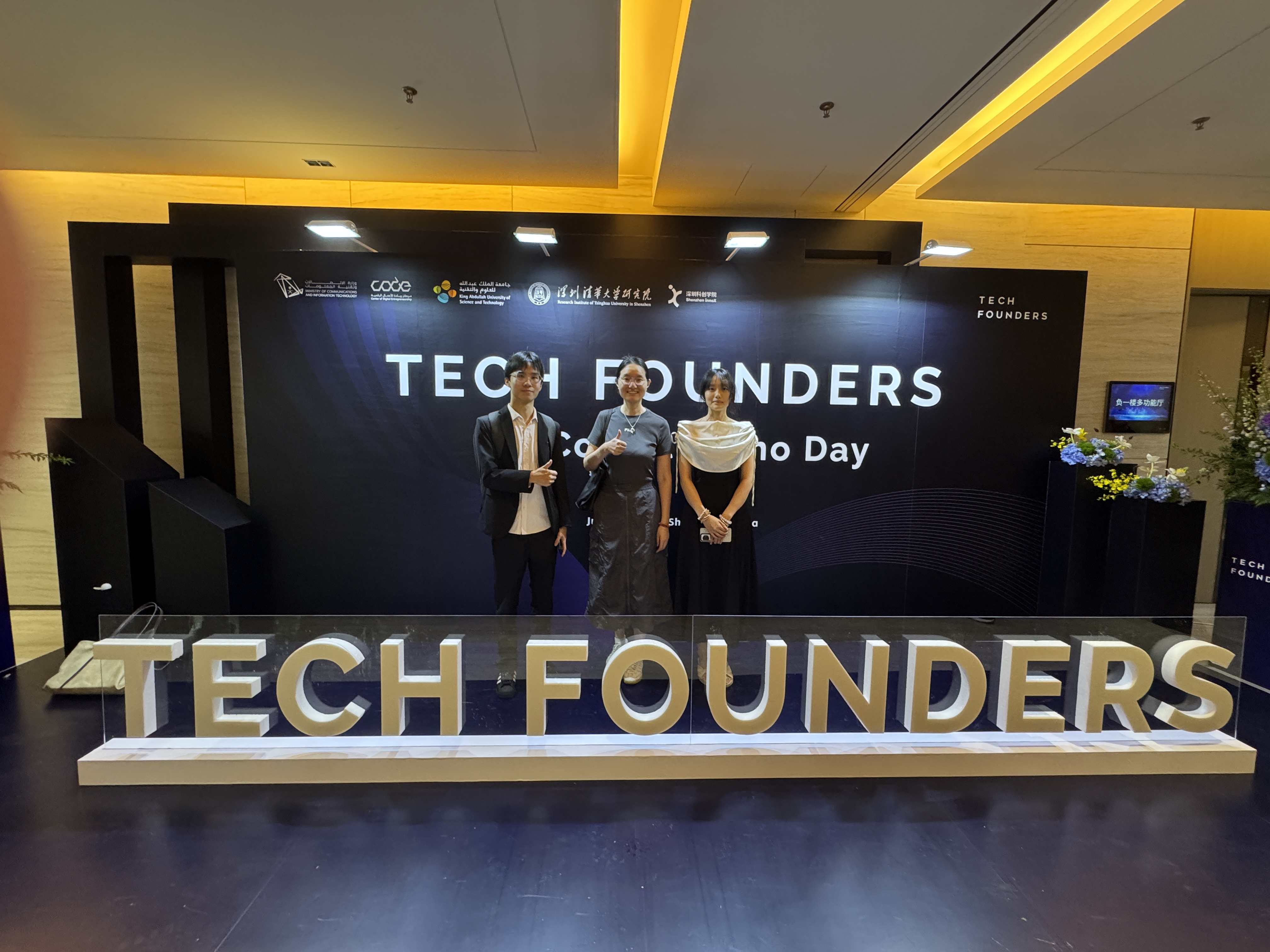
On July 31, 2026, the Saudi Tech Startup Demo Day – Tech Founders 9th Cohort was held at Lecture Hall B1 of the new building of Tsinghua University Research Institute in Shenzhen.
The Corridors Advisory (CA) team participated in the startup demo day as an industry observer, gaining insights into innovative projects across sectors including:
- Artificial intelligence;
- Biomedicine;
- Advanced manufacturing;
- New energy;
- Semiconductors;
- Low-altitude economy.
The team also exchanged views with technology companies, investors and ecosystem partners to better understand the development trends and practical needs of Chinese enterprises exploring opportunities in the Middle East market.
Focus on China–Middle East Innovation Ecosystem
The event focused on six cutting-edge sectors:
- Artificial intelligence;
- Biomedicine;
- Advanced manufacturing;
- New energy;
- Semiconductors;
- Low-altitude economy.
A range of technology-driven startup projects were presented during the event.
The programme also provided a platform for dialogue between:
- Chinese startups;
- Investors;
- Saudi industrial resources;
- Innovation ecosystems;
- Overseas market development organisations.
For technology companies exploring international expansion, these exchanges provide an opportunity to better understand regional market demand, investment priorities and potential cooperation models.
Saudi Vision 2030 and Emerging Technology Opportunities
Driven by industrial transformation initiatives under Saudi Vision 2030, the Middle East continues to increase its focus on innovative industries such as:
- Advanced manufacturing;
- Artificial intelligence;
- New energy;
- Digital technologies;
- Emerging industrial sectors.
At the same time, regional markets are increasingly encouraging international technology companies to participate in local industrial development and innovation ecosystems.
For Chinese technology companies, this creates opportunities to explore:
- Market entry;
- Technology cooperation;
- Local partnerships;
- Investment;
- Regional expansion.
However, market entry should be based on a detailed assessment of regulatory requirements, business models, localisation requirements and long-term commercial feasibility.
CA’s Focus During the Event
During the event, the CA team focused on understanding the practical challenges faced by technology companies entering Middle East markets.
Key areas of discussion included:
- Market entry strategy;
- Company establishment;
- Compliance management;
- Localisation;
- Investment structuring;
- Long-term development planning.
For companies entering Gulf markets, commercial opportunities should be evaluated together with practical implementation requirements.
These may include:
- Corporate structure;
- Licensing;
- Staffing;
- Banking;
- Tax compliance;
- Local partnerships;
- Operational planning.
Industry Exchange and Market Observation
During the networking sessions, the CA team exchanged views with:
- Startup founders;
- Investors;
- Industry representatives;
- Ecosystem partners.
The discussions focused on companies’ expectations and concerns regarding Gulf market expansion.
Drawing on CA’s experience in business advisory services across the UAE and wider Gulf region, the team shared observations relating to:
- Local business environments;
- Corporate compliance;
- Investment structures;
- UAE market entry considerations;
- Regional operational planning.
These exchanges also provided CA with further insights into the practical challenges faced by Chinese technology companies during international expansion.
What Technology Companies Should Consider Before Entering the Middle East
Technology companies considering expansion into the Middle East should generally assess several areas before establishing local operations.
1. Market Demand
Companies should evaluate whether their products or technologies address actual regional demand.
This may include reviewing:
- Target industries;
- Government development priorities;
- Customer segments;
- Existing competitors;
- Procurement models.
2. Market Entry Structure
Different commercial models may require different structures.
Companies may need to consider:
- Local company establishment;
- Regional headquarters arrangements;
- Partnerships;
- Distributors;
- Representative structures;
- Project-based market entry.
3. Licensing and Compliance
Technology companies should determine whether their proposed activities require:
- Commercial licences;
- Sector approvals;
- Product certifications;
- Data or cybersecurity compliance;
- Other regulatory permissions.
4. Localisation
Depending on the market and industry, companies may need to assess:
- Local workforce requirements;
- Local partners;
- Physical presence;
- Procurement requirements;
- Local service capabilities.
5. Long-Term Development Planning
Companies should also consider how their regional structure may support:
- Future investment;
- Customer acquisition;
- Technology deployment;
- Regional expansion;
- Long-term operations.
CA Observation
Participation in the Tech Founders 9th Cohort Demo Day provided CA with an opportunity for industry learning and market observation.
Through direct engagement with technology enterprises, investors and ecosystem participants, CA further strengthened its understanding of:
- The Middle East innovation ecosystem;
- Chinese technology companies’ international expansion needs;
- Cross-border industry cooperation models.
For companies planning to enter the Middle East, particularly the UAE market, effective expansion generally requires more than identifying commercial opportunities.
A practical market-entry strategy should integrate:
- Company setup;
- Licensing;
- Compliance;
- Investment structuring;
- Local implementation;
- Long-term operational planning.
How CA Supports Companies Exploring the Middle East
As a business consulting team focused on the Gulf region, Corridors Advisory (CA) supports companies considering expansion into the UAE and wider Middle East.
CA can provide support in areas including:
- UAE market-entry assessment;
- Company formation and corporate structuring;
- Business licensing;
- Compliance coordination;
- Investment structuring;
- Local operational planning;
- Banking and visa coordination;
- Ongoing corporate services.
CA will continue monitoring industry development trends across the Gulf region and providing practical support to companies seeking sustainable expansion into Middle Eastern markets.