
Dubai Customs and Emirates SkyCargo Integrated Logistics Bridge: What It Means for Businesses Entering the UAE
Overview
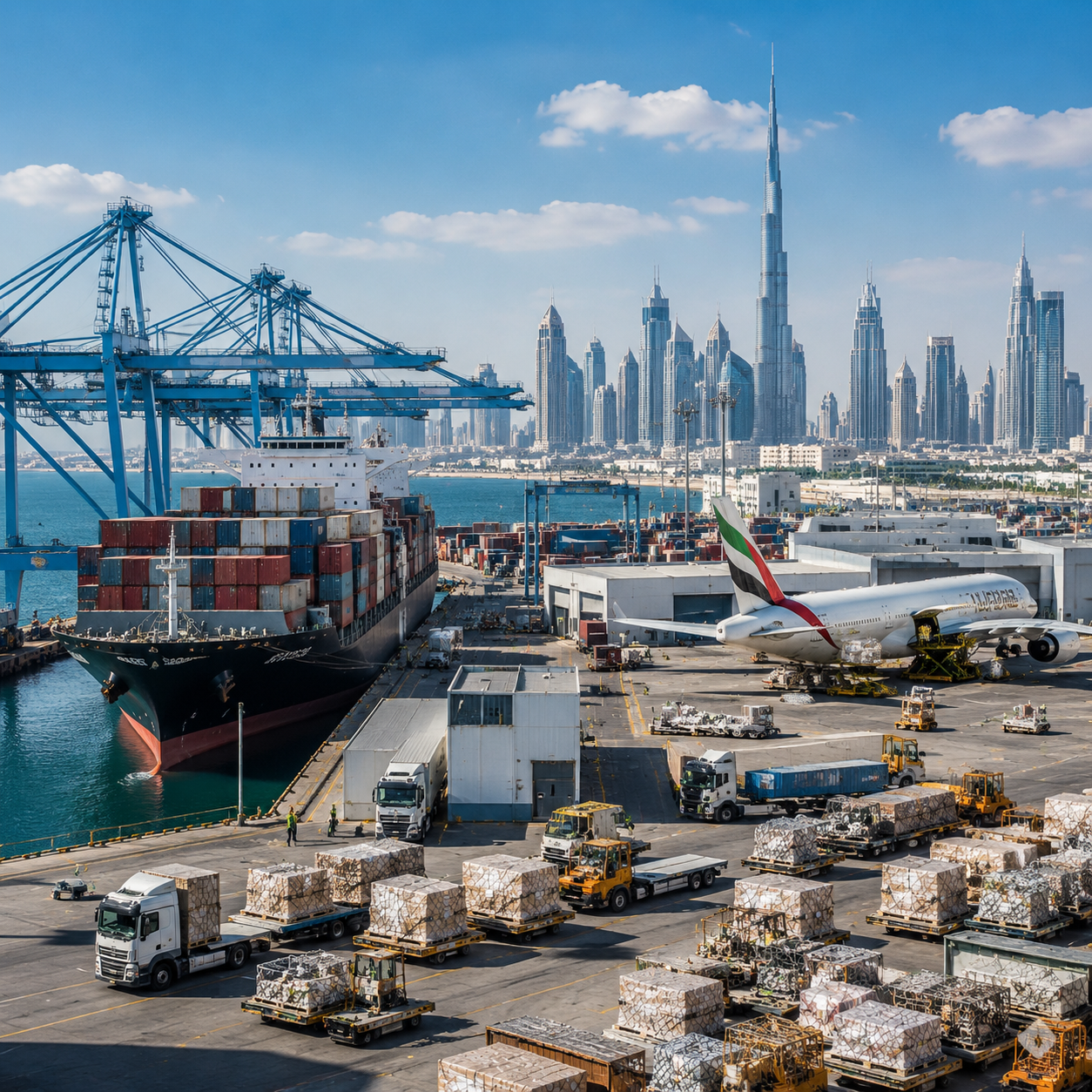
Recently, Dubai Customs and Emirates SkyCargo entered into a strategic partnership to establish an Integrated Logistics Bridge, further enhancing Dubai’s air cargo capabilities, customs clearance efficiency, and regional supply chain coordination.
According to Dubai Customs, the integrated system connects Dubai International Airport Cargo Village and Al Maktoum International Airport Air Cargo Centre, aiming to optimize cargo movement, enhance handling capacity, and support the continuous supply of essential goods across the UAE and the wider Gulf region.
Operational data show that from January to May 2026, imported cleared cargo volume across the two facilities increased from approximately 26.6 million kg to 48.2 million kg, representing growth of more than 82%. During the same period, 529 road logistics trips were completed, transporting approximately 2,636 tonnes of goods including food, pharmaceutical products, and general merchandise. This demonstrates the system’s ability to respond to changing cargo demands.
Why Logistics Capability Matters for Companies Entering the UAE Market
For companies entering the UAE market or using the UAE as a platform to connect with the Middle East, Africa, South Asia, and other regional markets, logistics and supply chain capabilities are important factors to consider when developing market strategies.
When evaluating the UAE as a trading, distribution, or operational platform, companies usually consider not only company formation, tax environment, and business costs, but also:
- Logistics routes and transportation methods for products entering the UAE;
- Stability and predictability of customs procedures;
- Regulatory requirements, certifications, and import procedures applicable to specific products;
- Warehousing, distribution, and regional supply chain arrangements.
The cooperation between Dubai Customs and Emirates SkyCargo reflects Dubai’s continued efforts to enhance trade facilitation and optimize its logistics ecosystem.
Dubai’s Logistics Competitiveness Comes from More Than Geographic Location
Dubai is widely recognized for its geographic connectivity between Asia, Europe, Africa, and the Middle East, supported by aviation, maritime, and road transportation networks.
However, for businesses, the value of a regional trade platform depends not only on location, but also on the overall operating environment, including:
- Customs and trade facilitation measures;
- Connectivity between airports, ports, and road transportation;
- Coordination between government authorities and businesses;
- Ability to respond to different business requirements.
For companies involved in import, export, re-export, regional distribution, or supply chain management, these factors may influence operational efficiency, delivery timelines, and customer service capabilities.
Companies That May Need to Pay Particular Attention to UAE Logistics Development
1. International Trading and Re-export Companies
For international trading and re-export companies sourcing products from Asia, Europe, or other markets, Dubai’s trade and logistics infrastructure can be an important consideration when evaluating regional expansion strategies.
2. Food, Pharmaceutical and Healthcare-related Companies
Food, pharmaceutical, and medical-related products often require higher standards in transportation, storage, and regulatory compliance. The focus on essential goods such as food and pharmaceuticals highlights Dubai’s continued efforts to strengthen coordination for priority cargo movement.
3. Cross-border E-commerce and Regional Fulfilment Companies
For cross-border e-commerce and regional fulfilment companies, logistics efficiency, warehousing arrangements, and market connectivity are important factors when assessing the UAE as a regional operational base.
4. Machinery, Spare Parts, Electronics and Industrial Product Companies
For companies trading machinery, spare parts, electronics, and industrial products, considerations should include not only logistics efficiency but also product classification, import requirements, certification, warehousing, and after-sales supply chain arrangements.
Market Entry into the UAE Requires Overall Business Planning
For companies entering the UAE market, company formation is only one part of the market entry process.
Companies should evaluate their setup based on their actual business model, including:
- Mainland or Free Zone structure;
- Whether offices, warehouses, showrooms, or industrial facilities are required;
- Import, re-export, or regional distribution model;
- Whether licensed activities match the actual business scope;
- Customs, certification, VAT, Corporate Tax, and banking compliance requirements.
It is important to note that whether the UAE is suitable as a regional trade or supply chain platform should be assessed based on the company’s products, target markets, logistics routes, cost structure, and regulatory requirements.
Different industries, product categories, and business models may require different market entry approaches in the UAE. Companies should therefore develop strategies based on their specific circumstances.
CA Observation
In our view, the cooperation between Dubai Customs and Emirates SkyCargo represents not only an improvement in logistics operations, but also Dubai’s continued efforts to enhance trade facilitation, supply chain coordination, and regional connectivity.
For companies planning to enter the UAE or explore surrounding markets through the UAE, logistics infrastructure, trade facilitation, and the regulatory environment are important factors when developing market entry strategies.
Corridors Advisory continues to monitor developments in UAE company formation, trade licensing, free zone policies, customs regulations, tax compliance, and supply chain-related matters, supporting clients with market entry and operational planning based on their specific business needs.