
What Businesses Need to Know
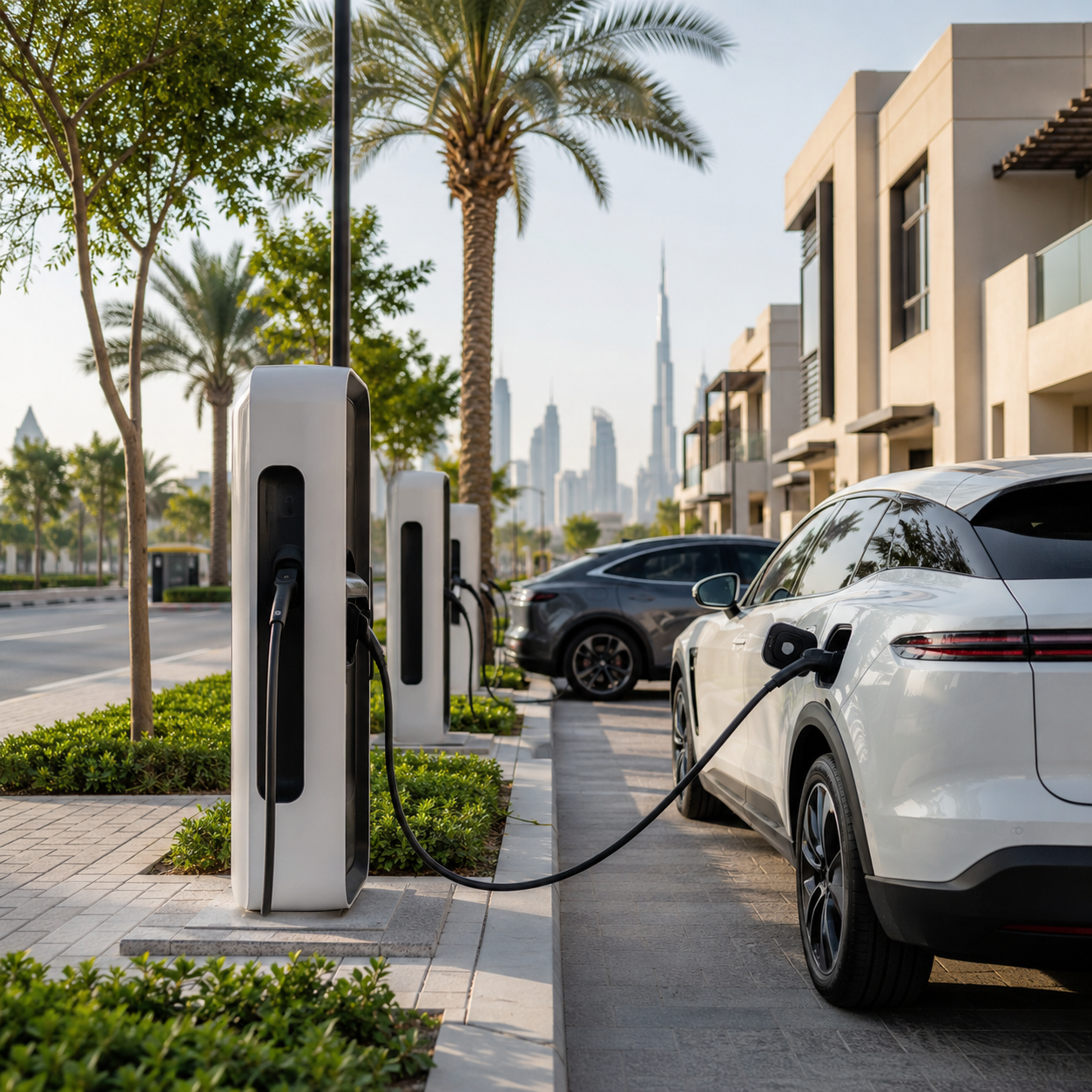
As Dubai continues to advance green mobility and clean-energy infrastructure development, EV charging infrastructure is expanding beyond traditional transport locations into community, public and commercial-use environments.
The development of EV charging infrastructure reflects Dubai’s broader efforts to support sustainable transportation, improve energy efficiency and create a more connected urban mobility ecosystem.
1. Community Charging Expansion
In July 2026, Dubai’s Community Development Authority (CDA) entered into a strategic partnership with Emarat EV Charging Stations Company (“UAEV”) to deploy electric vehicle charging infrastructure across community locations managed by CDA, including community councils, Majlis venues and wedding halls.
This initiative aims to improve access to EV charging services for residents and visitors while integrating green mobility infrastructure into community-focused facilities.
2. EV Charging Infrastructure Expanding into More Daily-Life Scenarios
While community facilities are one focus area, the initiative forms part of a broader series of EV charging infrastructure developments announced across Dubai.
Examples include:
-
April 2026: Dubai’s Islamic Affairs and Charitable Activities Department and UAEV announced cooperation to introduce smart EV charging infrastructure at mosque facilities, covering charging equipment deployment, operation, maintenance, performance monitoring, smart payment and energy management services.
-
April 2026: Dubai Municipality announced a planned investment of AED 150 million to install EV supercharging infrastructure across approximately 600 parking spaces at public parks, beaches and recreational facilities.
-
Dubai Electricity and Water Authority (DEWA) continues cooperating with public parking operators, taxi companies and other organisations to expand charging infrastructure across residential communities, shopping centres, public areas and fleet-operating locations.
These developments demonstrate that EV charging services are gradually becoming integrated into a wider range of urban facilities and commercial environments.
3. Dubai EV Charging Network Continues to Expand
According to information published by the Government of Dubai Media Office in January 2026, Dubai’s EV Green Charger network had exceeded 1,860 charging points.
It is important to distinguish that a “charging point” does not necessarily represent a standalone charging station. One charging station may contain multiple charging points.
By mid-January 2026, DEWA’s EV Green Charger initiative had approximately 23,600 registered users. Since its launch in 2014, the initiative had supplied more than 55,200 megawatt hours of electricity.
DEWA currently provides various charging solutions, including:
- Ultra-fast chargers
- Fast chargers
- Public chargers
- Wall-box chargers
Dubai’s public EV charging infrastructure currently involves two main types of participants:
- Infrastructure developed by DEWA and related entities;
- Infrastructure developed and operated by independent charge point operators licensed by DEWA.
4. What Businesses Should Consider
For companies planning to supply, install, develop or operate EV charging infrastructure in Dubai, business models and project requirements should be carefully assessed.
Business Scope and Licensing
Companies should ensure that their trade licence covers relevant activities, including:
- EV charging equipment trading;
- Installation services;
- Maintenance services;
- Energy-related services;
- Charging network operations.
Technical Standards
Charging equipment may need to comply with applicable:
- Electrical standards;
- Safety requirements;
- Communication standards;
- Technical specifications.
Relevant testing, certification or approvals may be required depending on project requirements.
Site and Utility Approvals
EV charging projects may involve:
- Site arrangements;
- Electricity connection;
- Construction requirements;
- Fire safety approvals;
- Other relevant permits.
Commercial Models
Companies may need to evaluate cooperation models with:
- DEWA;
- Charge Point Operators (CPOs);
- Property developers;
- Public entities;
- Local operators.
Projects and Supplier Registration
Projects involving government entities, public facilities or major developments may require:
- Supplier registration;
- Qualification review;
- Technical evaluation;
- Tender procedures.
Local Support and After-Sales Capability
Long-term projects may require:
- Local installation capability;
- Maintenance support;
- Spare parts supply;
- Technical assistance.
5. Implications for EV and Clean Energy Companies
For companies involved in:
- EV charging equipment;
- Charging software platforms;
- Smart payment systems;
- Energy management solutions;
- Related infrastructure services,
Dubai’s expanding EV charging ecosystem represents a development area worth monitoring.
Potential areas to consider include:
- Charging equipment demand across different applications;
- Charging solutions for residential communities, public facilities and commercial fleets;
- Charging network software and smart management systems;
- Cooperation models with local operators, developers and government-related entities.
However, companies should not assume market opportunities solely based on public announcements. Market entry should be assessed based on:
- Product category;
- Business model;
- Licensing requirements;
- Local regulatory environment.
6. Market Entry Considerations in the UAE
For companies entering Dubai’s EV charging and clean-energy sectors, successful market entry requires consideration of:
- Local regulatory requirements;
- Corporate structure;
- Licensing arrangements;
- Operational planning.
Companies should evaluate:
- Mainland or Free Zone structure;
- Applicable business activities;
- Required approvals;
- Project participation models;
- Compliance obligations.
Different business models may require different approaches. Companies should develop market entry strategies based on their actual circumstances.
7. How CA Can Support Businesses
For companies considering entry into Dubai’s EV charging and clean-energy infrastructure sectors, CA supports businesses through:
- Market research;
- Company setup;
- Licensing advisory;
- Compliance assessment;
- Local implementation support.
Corridors Advisory continues to monitor developments in UAE business setup, licensing requirements, regulatory policies and clean-energy-related opportunities, supporting companies with practical market entry planning.